01 · Hardware
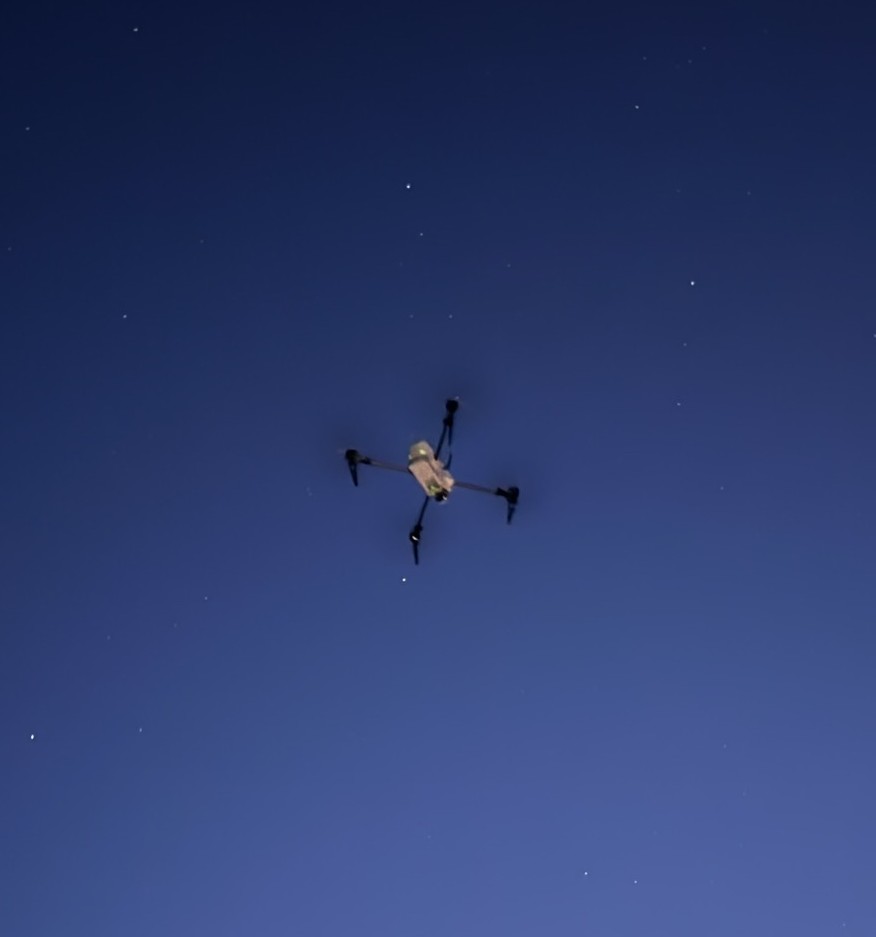
Aircraft.
Transports the communication payload. Flies to the chosen landing point, lands, then returns to the operator when the mission is complete.
The system
01 · Hardware
Transports the communication payload. Flies to the chosen landing point, lands, then returns to the operator when the mission is complete.
02 · Payload
An advanced relay, built to work with the radios crews already carry. No new device on the belt: crews keep the handhelds, the channels and the call signs they already have.
03 · Software
The ground control software that plans the mission, flies it and shows the link, on one screen. It needs no internet; the maps are saved before the crew leaves the road.
How it works
Crews work in terrain that blocks their radios’ line of sight to command. The relay lands on high ground between them, and the radios they already carry reach across.
Tap a step to play it
Illustrative. Not a measured link.
The ground
Click a marker to open a point.
01
Link
We do not yet know how far a fleet of these can go. One aircraft holds one high point; a line of them could hold a whole incident, and the same capability has a place wherever crews work beyond the reach of a tower. We are not claiming that today. Our job is to make the one aircraft worth trusting, prove its numbers in the open, and let the fleet follow.